
Background & Rationale:
A consensus set of knowledge, skills, and attitudes needed for the practice of public health are considered competencies. Core competencies are the consensus set of knowledge, skills, and attitudes that each public health worker should possess to effectively deliver essential public health functions in a certain context. Core competencies, organized across various domains reflecting skill areas within public health, provide a framework for assessing workforce capabilities, guiding recruitment, managing performance, informing competency-based job descriptions and training programs.
District Health System Managers are the mid-level leaders of the state health system responsible to ensure health and well-being of the entire population within a district. This cadre includes a range of positions such as Chief Medical Officers, National Health Mission District Managers, Additional Chief Medical Officers etc. working from District Health Offices throughout the country (excluding clinical services providers working at district hospitals). This cadre carry out important responsibilities spanning implementation of national and state programs, responding to health emergencies, mobilizing financial and other resources, collecting, managing, and reporting public health data, coordinating inter-sectoral entities, and supervising and managing performance of all public health entities and workforce functioning below the district-level. To fulfil these roles, District Health Managers must combine technical expertise with strong managerial skills to oversee and coordinate large-scale programs across block and sub-block level health systems. Despite their pivotal role, India currently lacks a formally defined, nationally agreed-upon set of core competencies for this cadre. Thus far, there have been no prior systematic effort to identify the training and capacity-building needs of district-level public health managers to equip them for complex challenges facing district health systems, including climate-related risks, disasters, and evolving disease patterns.
Work undertaken:
Recognizing this gap, the India Primary health care Strengthening Initiative (IPSI) undertook an effort to identify the core competencies of district health system managers. Preliminary work was undertaken in Meghalaya, Odisha, and Gujarat.
IPSI’s efforts to identify core competencies for district health system managers involved three steps:
- Document review and in-depth interviews in select states to understand current and evolving roles and performance expectations of district managers
- Synthesize the findings and draft competency statements
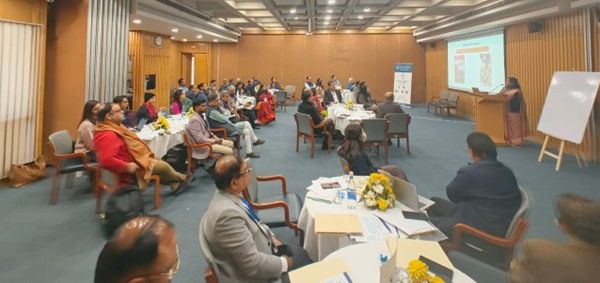
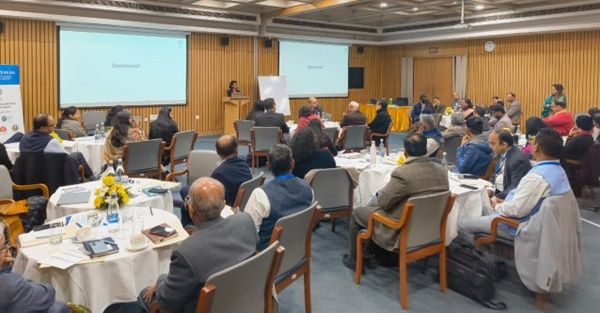
- Refine the set of competencies through a national consultative workshop
Based on this work, we have developed a draft set of core competency statements and associated knowledge, skills and attitudes organized across eight domains.