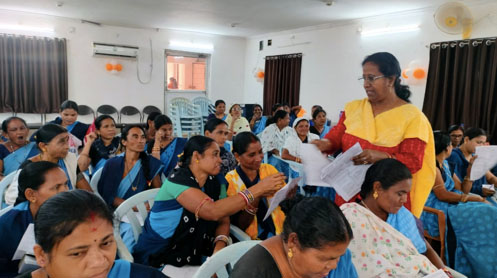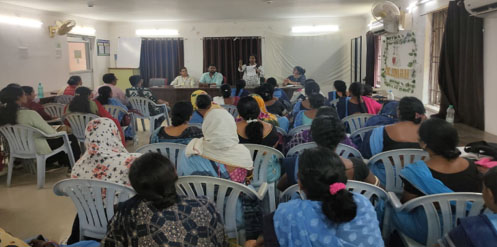

NCD Portal Training and Orientation
A training and orientation on the NP-NCD portal, combined with a review-cum-orientation on the ACT-QI intervention, was held on 7th February 2026 at CHC Junagarh, Kalahandi, Odisha.
The session aimed to strengthen facility staff capacity in using the NP-NCD portal, with focus on accurate data entry and use of dashboard features. It also covered interpretation of key dashboard indicators and their implications for service delivery and performance monitoring, alongside discussion of field-level challenges in portal use.
Sessions covered the NCD care cascade — screening, diagnosis, treatment, and follow-up — along with the roles of healthcare providers and the importance of accurate data management for monitoring.
A total of 71 participants attended, including representatives from the state, district, and block levels, as well as facility staff from SHCs and PHCs in Junagarh. This included 41 participants from 20 SHCs (18 CHOs and 23 ANMs/MPWs), 10 participants from 5 PHCs (5 Medical Officers and 5 other staff), 9 district and block-level officials, and 11 members from the state and IPSI teams.
Participants were guided through portal functions including new case entry, follow-up recording, referral tracking, and dashboard use, with indicators such as follow-up adherence and control rates explained in detail. Practical exercises using facility records allowed participants to identify gaps and strengthen data entry and validation skills. The session concluded with guidance on regular data updates, reconciliation with registers, and use of due lists for patient tracking. were also trained in maintaining due lists and promoting healthy lifestyle practices at the community level.
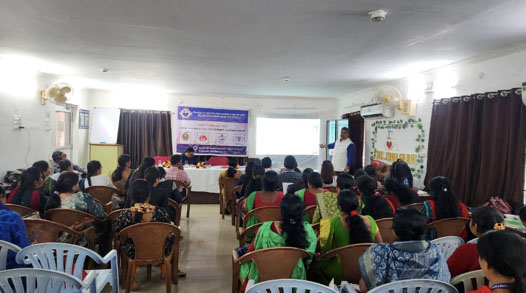
Workshop cum Orientation on NP-NCD Program and ACT-QI Intervention
A workshop cum orientation on the NP-NCD Program and ACT-QI intervention was held on 19th March 2026 at CHC Junagarh, Kalahandi district, Odisha.
The workshop was organized to build shared understanding among facilitators and facility-level staff on the NP-NCD program and the ACT-QI intervention, with particular focus on staff roles and responsibilities in implementation and the facilitators’ role in providing continuous handholding support.
Participants included 40 SHC staff (17 CHOs and 23 ANMs/MPWs), 8 PHC staff (3 Medical Officers and 5 other staff), 19 facilitators, 6 district/block-level officials, and 9 IPSI team members.
Sessions covered the NCD care cascade — screening, diagnosis, treatment, follow-up, and control — along with population-based estimation of disease burden and identification of service delivery gaps. Discussions also focused on strengthening data management practices, including maintenance of NCD registers, line listing, and reconciliation with portal data.
Sessions on quality improvement highlighted the value of continuous, small-scale changes in addressing gaps in follow-up, referral tracking, and data use. Group-based exercises allowed participants to identify facility-level gaps across the care cascade and propose practical solutions. The workshop concluded with action points on strengthening line listing, improving follow-up mechanisms, ensuring drug availability, and improving coordination among stakeholders.
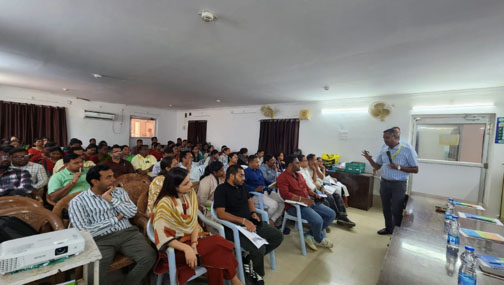
ASHA Orientation
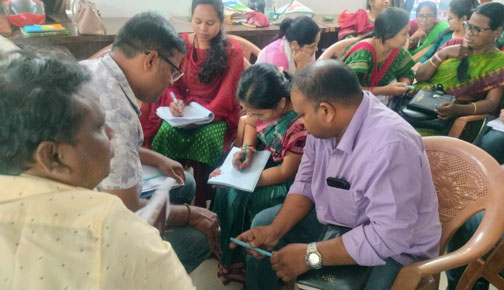
ASHA orientation programs on the NP-NCD Program were conducted across Junagarh Block, Kalahandi, in April 2026 to strengthen community-based prevention and management of non-communicable diseases.
The sessions covered ASHA workers’ roles in hypertension and diabetes screening, CBAC-based risk assessment, line listing, referral, patient follow-up, and treatment adherence. ASHAs were also trained in maintaining due lists and promoting healthy lifestyle practices at the community level.