

Using Data to Measure Primary Health Care Program Performance
The key objective of the India Primary Healthcare Support Initiative (IPSI) is to strengthen the district primary health care systems and processes. Recognizing that strong district health systems need program managers with the relevant competencies to carry out their functions, IPSI has worked on a competencybased training for district and block level managers and has developed and delivered training on the critical skill of using data effectively for decision-making.
Rationale
Data is the backbone of effective health system management. The training needs assessment undertaken at three project districts highlighted the gaps in data quality assessment and routine data analysis skills . Another study of data systems at a district, indicated that ample data is collected in routine health management information systems, however, this is primarily geared towards monitoring programs by health system managers and not used effectively for problem identification and local planning . Therefore, a training curriculum was developed for health system managers to strengthen their knowledge and skills related to the use of data to measure primary health care performance.
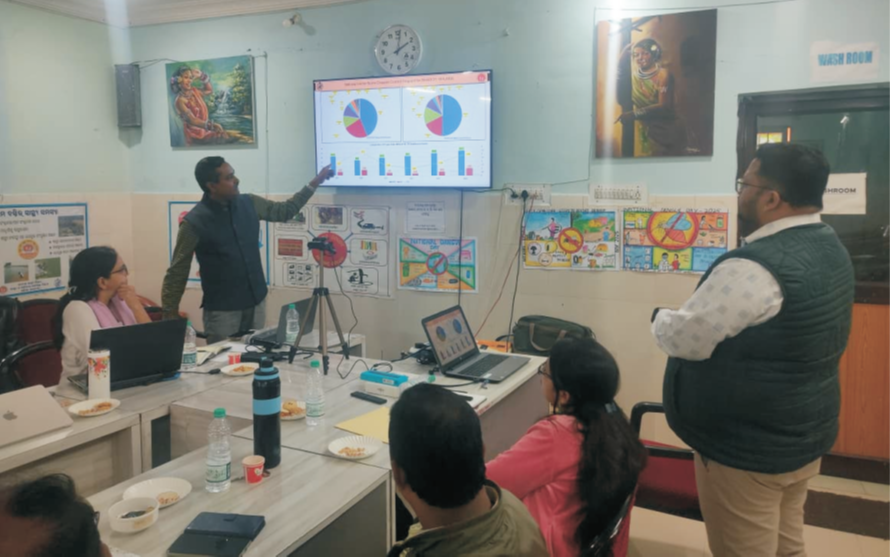
Key features of training
- Content developed in consultation with district program ?managers.
- Training used adult learning principles of reflective and ?experiential learning.
- Incorporated exercises and group work using routine health systems data.
Training objectives
- Frame questions that can be answered using routine data sources and interpret results.
- Apply basic data analysis and data visualization techniques to routine data.
- Identify issues with data quality and ways to address them.
- Estimate service coverage indicators.
- Develop a framework for measuring PHC program performance.
Training structure
- Participants: Health system managers at the ?district and block level. ?
- Trainers: Faculty from IPSI partner institutes.
- Course facilitators: IPSI project team from the state partner institute to facilitate the ?group work/exercises.
- Duration: 18-20 hours of content delivered ?through capsule training for 4 days
- Modality: In-person.
Training content
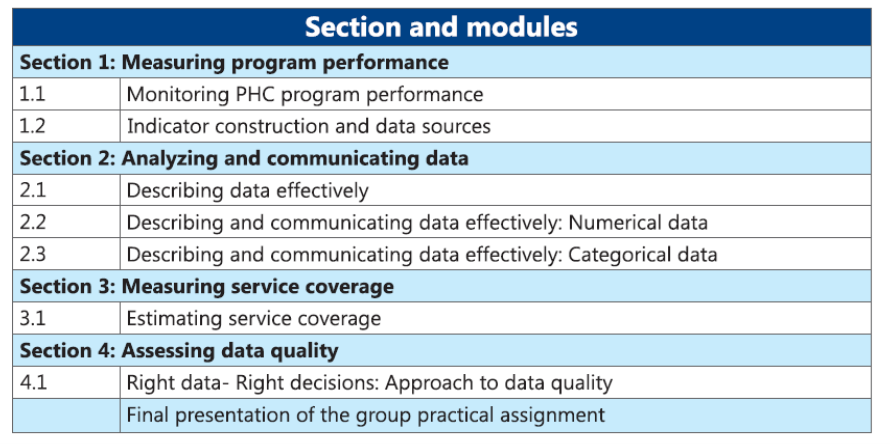
The training was divided into four sections. Each section had one to three modules of two hours each. Each module comprised of approximately 45 minutes of lecture time, one hour for lesson-based exercises and groupwork, and 15 minutes for recap.
What next?
IPSI has completed training of the first batch of district and block managers at Kalahandi, Odisha and will be expanding the training to other districts and states. Develop a guidebook for implementing training on data use: Based on the experience across IPSI sites, we will develop a guidebook containing the operational steps, facilitator manual and the content for training. This can be used as a reference for other states and districts that wish to implement the training. Work with local institutions to develop competency-based training programs in public health sciences (e.g. basic epidemiology, health systems) for district-level managers.