
Objective of the NQAS support in West Garo Hills
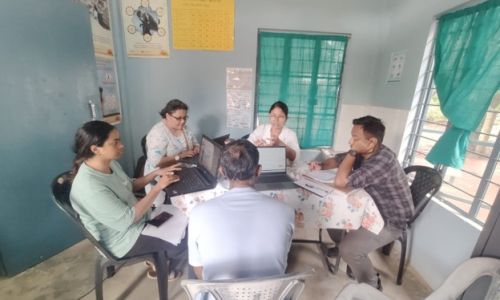
The India Primary Health Care Support Initiative (IPSI) partnered with the District Medical and Health Office in West Garo Hills to strengthen NQAS readiness across six Health & Wellness Centres (HWCs) nominated by the district. Rather than limiting support to pre-assessment preparation, IPSI focused on building sustainable quality improvement systems through gap assessments, cross-learning visits, structured mentoring, and continuous on-site technical assistance. These interventions enabled facilities to integrate quality assurance into routine service delivery while strengthening staff capacity, ownership, and long-term readiness for NQAS assessment.
Overview of the support activities
- Institutionalise peer learning through cross-learning visits: Cross-learning visits enabled healthcare teams to observe quality improvement practices in functioning facilities and immediately adapt them within their own settings. Instead of classroom-based instruction, staff learnt through practical demonstrations, peer interaction, and problem-solving in real service environments.
Examples included organising emergency trays and first-aid boxes, maintaining housekeeping rosters, strengthening OPD documentation, improving Patient Support Group (PSG) activities, displaying IEC materials strategically, organising quality meeting records, maintaining high-alert medicines, conducting social audits, and strengthening community feedback mechanisms. Facilities also exchanged practical approaches for medicine storage, stock management, and systematic file organisation, making quality improvement easier to replicate across facilities - Build reliable documentation systems that support service delivery: Documentation was strengthened not merely to satisfy NQAS requirements but to improve continuity of care, accountability, and routine monitoring. IPSI supported facilities in establishing systematic filing systems, standardising registers, and integrating record maintenance into everyday work.
Support extended beyond mandatory clinical records to include quality meeting registers, complaint registers, patient satisfaction surveys, equipment inventories, staff competency assessments, medicine expiry and daily drug consumption registers, stock and calibration registers, palliative care, NCD screening and follow-up, tuberculosis screening, immunisation, maternal health, referral services, home visits, post-exposure prophylaxis, biomedical waste management, and community engagement documentation. This ensured evidence was consistently available for supervision, programme monitoring, and NQAS assessment. - Embed quality improvement into routine facility management: Rather than treating NQAS as a one-time assessment, facilities established systems that supported continuous quality improvement. Mentoring focused on strengthening Quality Management Teams, assigning clear staff responsibilities, maintaining duty rosters, conducting regular quality meetings, and monitoring progress through structured action plans.Facilities introduced fishbone analysis, Corrective and Preventive Action (CAPA), routine internal reviews, social audits, complaint management systems, and community satisfaction surveys to identify and address service gaps. These mechanisms helped institutionalise quality improvement as part of routine facility management.
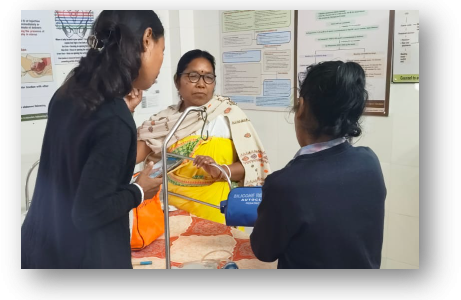
- Improve clinical readiness through practical mentoring: Hands-on mentoring strengthened day-to-day clinical readiness by focusing on systems directly affecting patient safety and service quality. Staff received practical demonstrations on organising emergency trays, managing high-alert and LASA medicines, preparing chlorine solution, implementing infection prevention and control measures, mercury spill management, biomedical and liquid waste segregation, rapid diagnostic test SOPs, labour room organisation, prescription audits, Safe Care Life Kit management, medicine labelling, vaccine management, diagnostic tracking, sterilisation procedures, and drug stock management using both MMDSL and offline systems.
- Improve communication through locally relevant IEC materials: IPSI supported the printing and lamination of durable IEC materials to improve patient awareness and compliance with NQAS standards. Materials covered infection prevention and control, emergency care, hypertension and diabetes management, maternal and child health, nutrition, mental health, biomedical waste segregation, patient rights, and standard clinical pathways. Complaint box information in the local language and clear signage further improved communication with beneficiaries and strengthened patient-centred care.
- Provide intensive on-site technical support for rapid gap closure: For facilities requiring additional support, IPSI teams worked alongside healthcare workers to rapidly close identified gaps before assessment. Rather than only providing recommendations, mentors supported staff in organising registers, labelling medicines and storage areas, arranging policy files, preparing competency assessment records, improving ANC and labour room organisation, updating drug inventories, and strengthening facility documentation.
At Masangpani HWC, dedicated on-site support was provided for IEC printing and lamination, medicine and register labelling, and documentation strengthening. This collaborative approach improved staff confidence while ensuring quality improvement practices became part of routine operations. A similar support exercise is extended to the other target HWCs as indicated by the District.
Output
As a result of IPSI’s support since May-June 2024, West Garo Hills district a cumulative 11 NQAS-certified health facilities as on date. This includes 8 SC HWCs, 2 PHCs and 1 District Hospital. The Office of the District Medical and Health Office, West Garo hills recognized and appreciated the support towards NQAS Strengthening which has deeply contributed to the accelerated progress towards NQAS Certification.