

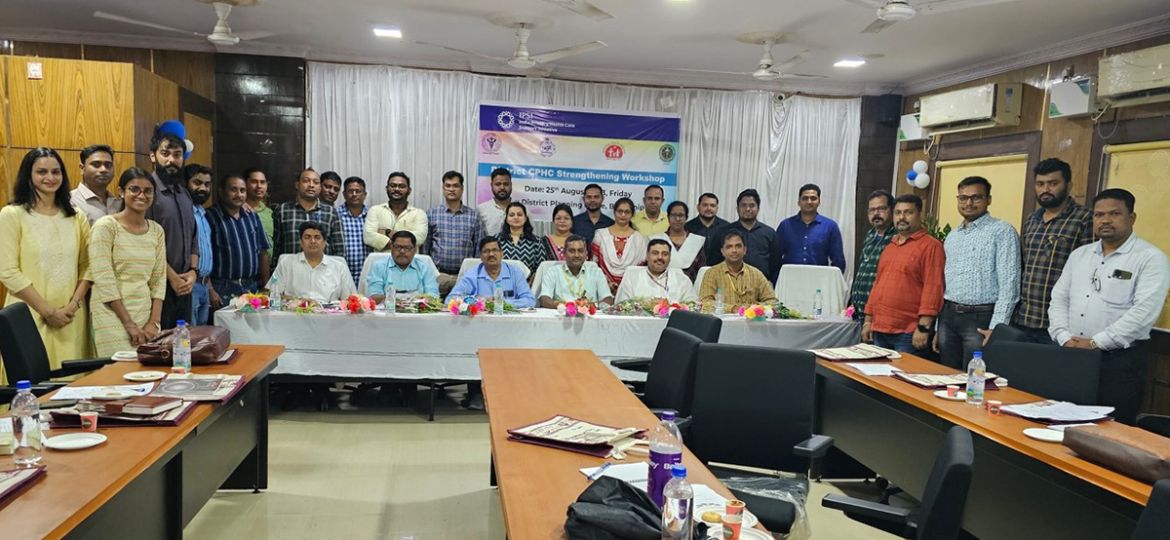
Bottom-up decision making requires free space to think and prioritize. To facilitate this, a workshop was conducted using the human-centered design approach with district level managers and health facility staff responsible for improving the quality of care in public health facilities in Kalahandi, Odisha. Human-centered design approaches are increasingly being used in health research settings globally, but practical experiences of using such tools have been less documented. In this practice note, we outline the steps followed in the human-centered design workshop, the types of solutions developed by the implementers, and key insights that emerged.
Admin
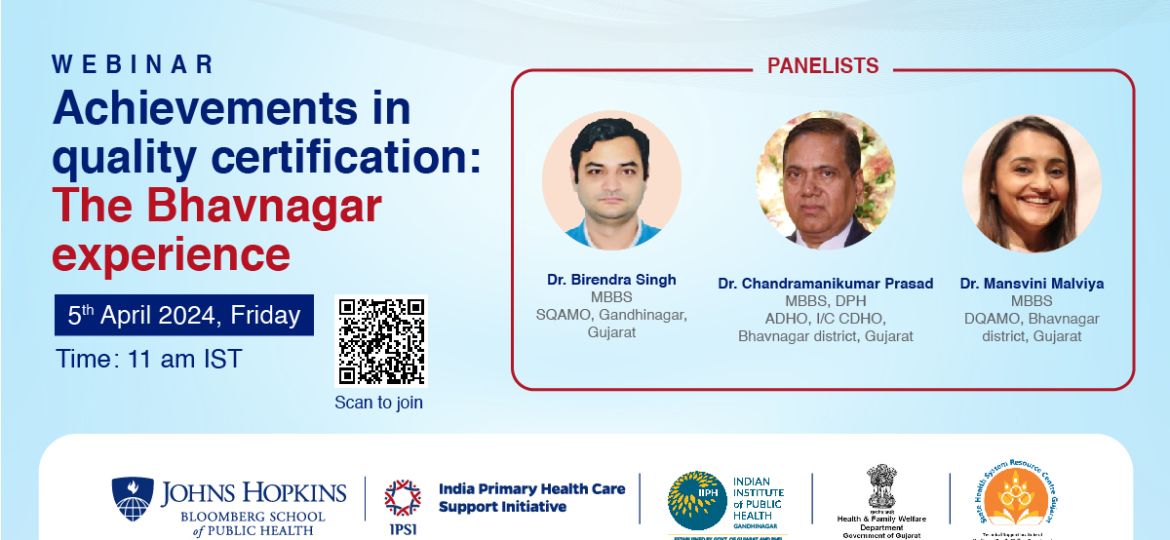
The National Quality Assurance Standards (NQAS) certification is an important government initiative to improve and maintain quality standards at public sector health facilities in India. Health facilities are assessed through a set of comprehensive, pre-defined standards derived from global best practices. However, achieving and maintaining certification is an ongoing challenge for many health facilities in India. Bhavnagar district in Gujarat has managed to achieve high levels of primary health care facility certification within a relatively short time. In this note, we discuss the reasons for this success.
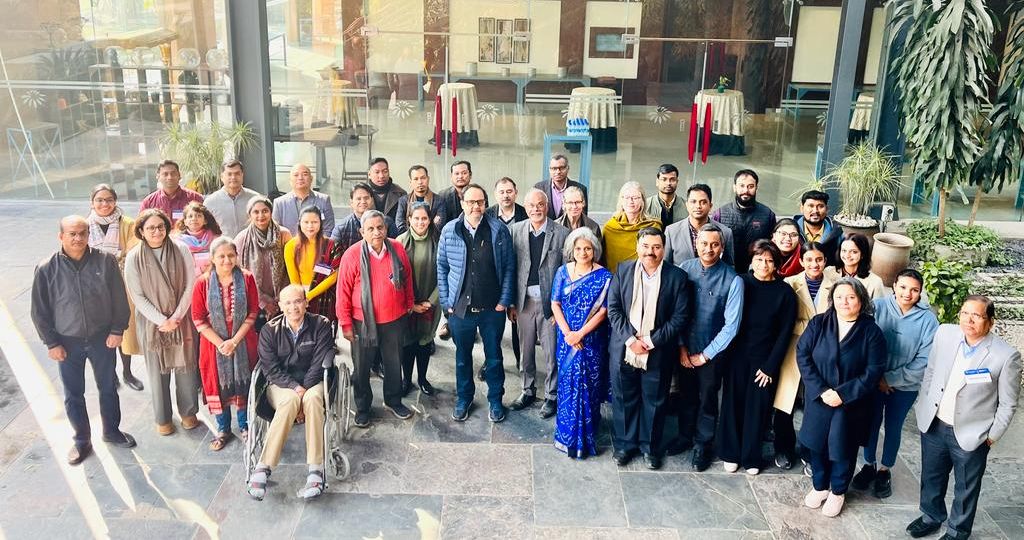
An annual retreat for IPSI project was held on 13th and 14th January 2024 at Delhi NCR. The main objective of this two days event was to take stock of the project journey so far and more importantly to plan the strategies needed to be adopted for next couple of years.
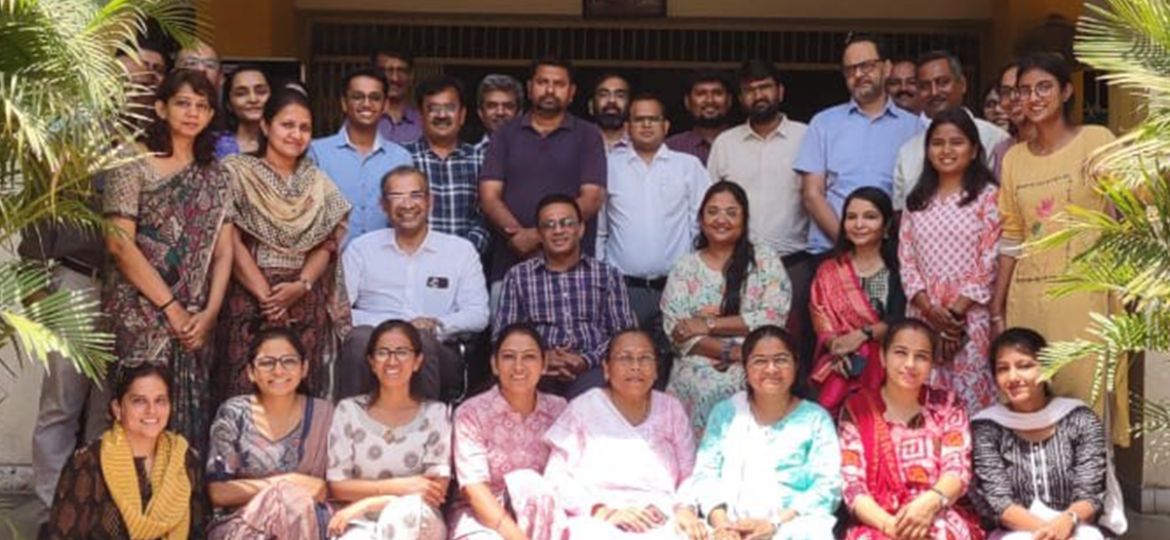
A workshop for HWC team mentoring was held on 8th and 9th April at Bhavnagar. The main objective of this two days event was to identify the competencies required by HWC team members to perform their functions effectively.
IPSI launches its policy series ‘Primary Health Care matters’ on World Health Day. Read here for articles, news and updates, resources on primary health care by India Primary Health Care Support Initiative.
Authors: Madhavi Misra, Harsha Joshi, Rakesh Sarwal, and Krishna D Rao. Introduction In response to the ongoing COVID-19 pandemic, countries…
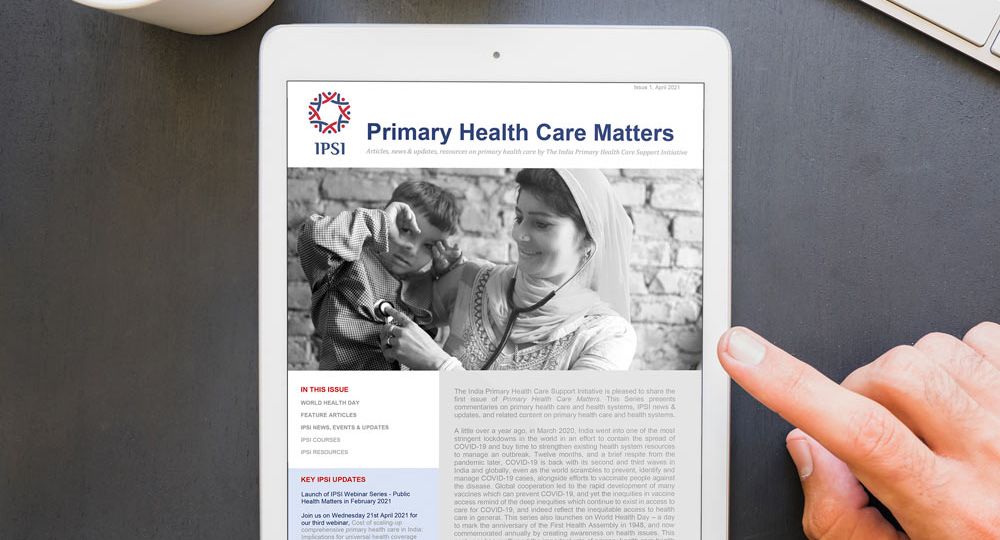
IPSI launches its policy series ‘Primary Health Care matters’ on World Health Day. Read here for articles, news and updates, resources on primary health care by India Primary Health Care Support Initiative.
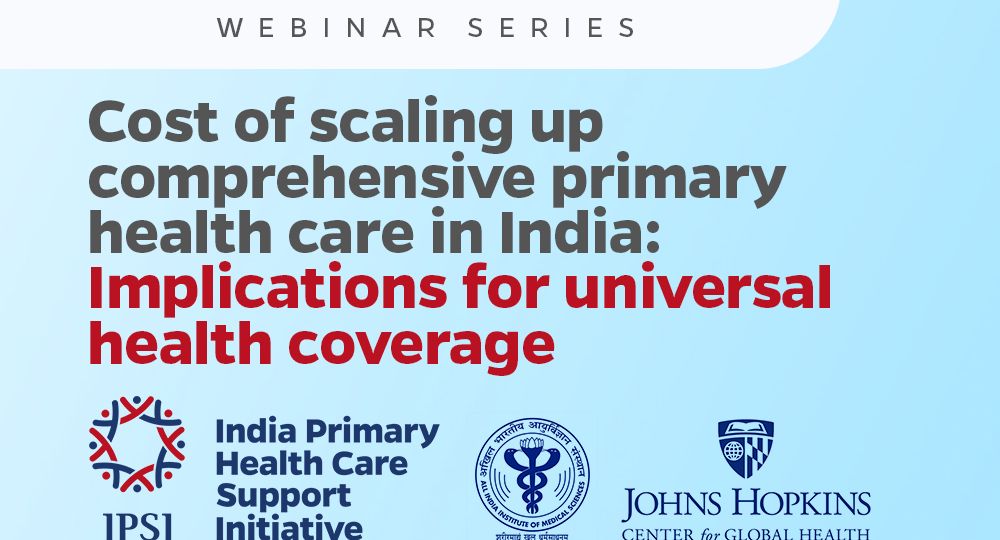
Please join us on Wednesday, April 21st 2021, 1730hrs Indian Standard Time (0800hrs EDT; 1300hrs CET), for IPSI’s third webinar on the Cost of scaling-up comprehensive primary health care in India: Implications for universal health coverage. The webinar is part of the series ‘Public Health Matters’ brought to you by the India Primary Health Care Support Initiative (IPSI) – a partnership between the Johns Hopkins Bloomberg School of Public Health and AIIMS-Delhi.
Krishna D. Rao
Director IPSI, and Associate Professor, Johns Hopkins Bloomberg School of Public Health
Pandemics are highly inequitable. They impose a disproportionate burden of morbidity and mortality on countries and people at the lower end of the income distribution. Moreover, as in the case of COVID-19, control efforts through social distancing and population lockdowns have brought additional deprivations on vulnerable populations. In low- and middle- income countries (LMIC) and elsewhere, the slowdown in economic activity has resulted in rapidly rising unemployment, particularly in the informal sector, where the majority of workers are employed and without adequate social safety nets. The effects of COVID-19 and population lockdowns will have short and long term effects on health, human capital, and income of vulnerable populations. It is now increasingly clear that economically vulnerable groups are being forced to sacrifice disproportionately more for the better health of society. To mitigate the deprivation due to COVID-19 it is necessary for government safety net programs to provide long term support focused on specific vulnerable populations.